Most dogs in Fort Mill get a proper groom on a schedule and a home bath only when something happens: a muddy yard after a thunderstorm, a roll in something unspeakable at the park, a skunk-adjacent decision. Those emergency baths are exactly the ones that get rushed, and a rushed bath has a predictable bill, paid not in money but in itchy skin, returning odor, and a coat that mats in places it never matted before.
The fix is not more equipment. It is refusing to skip the three steps people skip: diluting the shampoo, rinsing past the point that feels reasonable, and drying until the skin itself is dry. Here is what each shortcut costs the dog.
Shortcut one: shampoo straight from the bottle
Dog shampoo is concentrated on purpose. Poured on neat, it clings in patches, barely spreads, and resists rinsing, so owners use more water, more time, and still leave residue behind. That residue is the itch that appears two days later and gets blamed on allergies, pollen, or the shampoo brand itself. Dilute it in a bottle with water, shake, and apply the mix. It spreads through the coat in seconds, lathers evenly, and rinses out in a fraction of the effort.
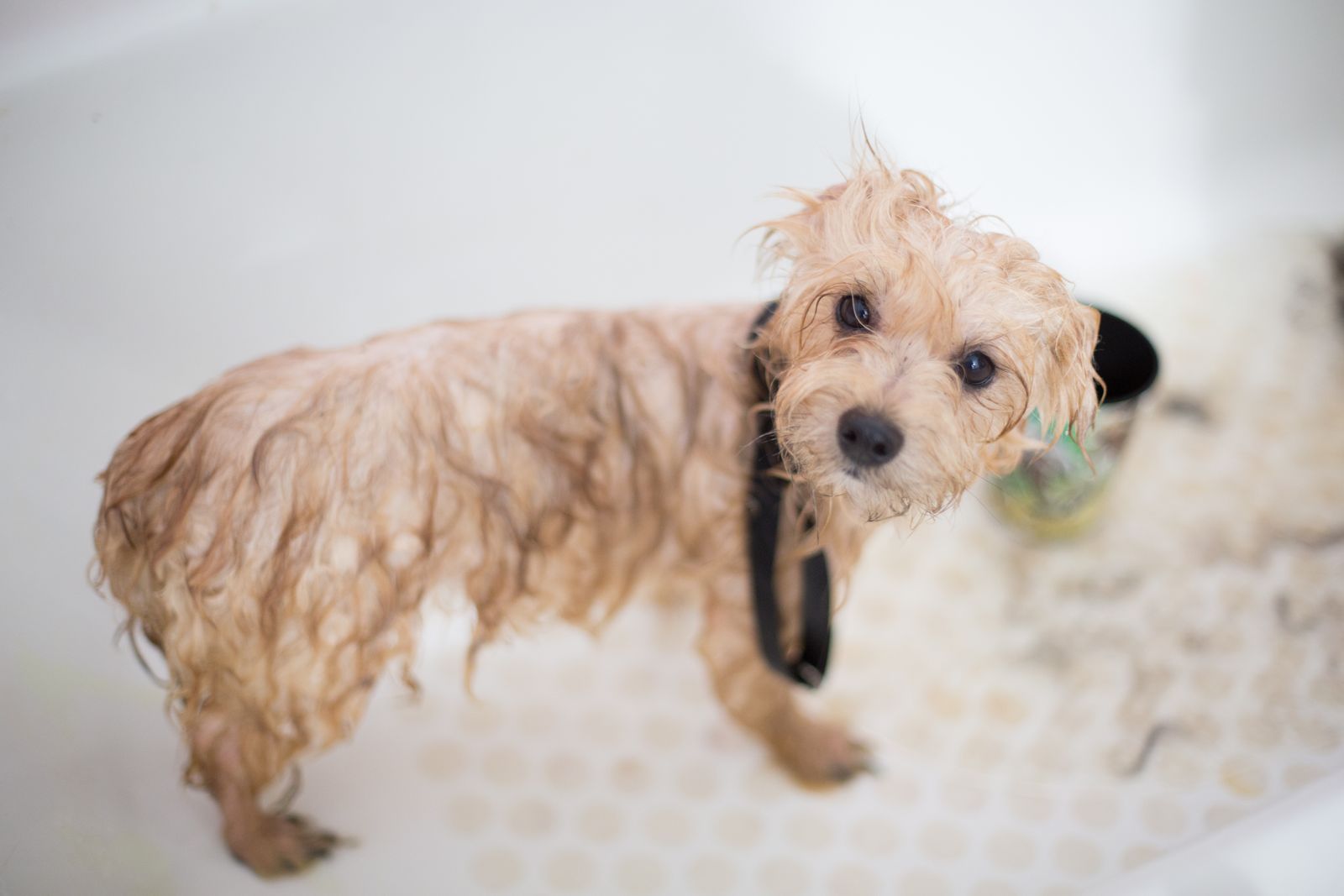
Shortcut two: the rinse that ends early
Rinse until you think you are done, then keep going. Shampoo hides in the dense parts of the coat, the chest, the ruff, the feathering on the legs, long after the water over the back runs clear. A practical test: part the coat and look at the skin while rinsing. Bubbles or a slippery feel at skin level mean product is still there. On a thick coated dog, the rinse should take longer than the wash. That is not wasted water; it is the difference between a clean dog and a dog wearing a thin film of soap for a week.
Shortcut three: damp and done
Air drying works for a wash-and-wear short coat in August. For anything with length or density, in South Carolina humidity, it means hours of damp skin. Damp skin under a warm coat grows the yeasty, musty smell owners describe as the bath not working, and it softens small tangles into mats as the coat dries in clumps. Towel first, then use a dryer on a low heat setting, brushing as you dry so air gets between the layers. Work until a parted section shows dry skin and the fur feels cool and loose, not warm and heavy.
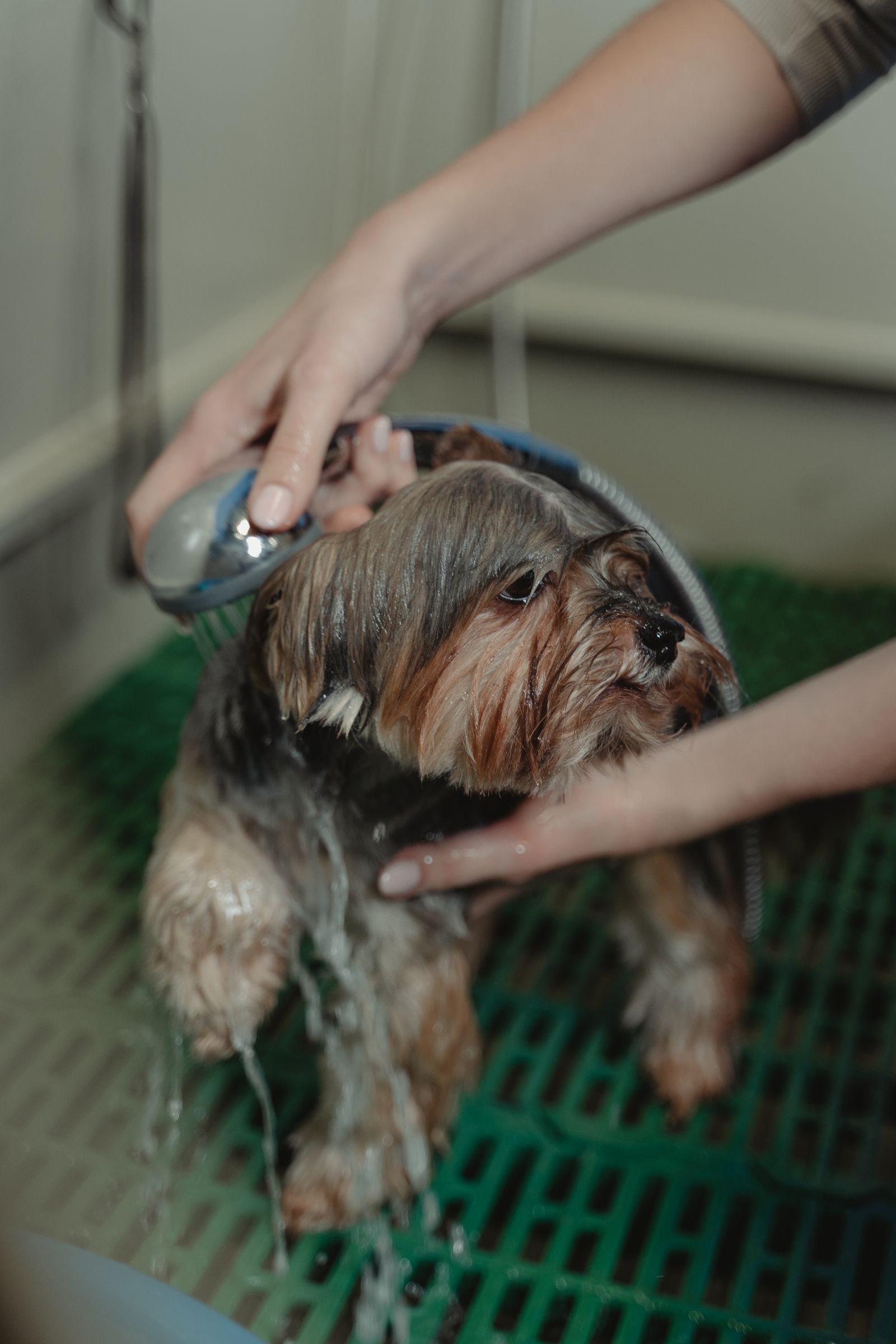
Set the room up before the dog comes in: shampoo already diluted, towels stacked, dryer plugged in, treats within reach, and a non-slip mat in the tub. A bath that pauses while you hunt for supplies is a bath that loses the dog's patience, and patience is the real time budget here. Warm the room a little in winter, keep it ventilated in summer, and close the bathroom door, because a wet dog's first plan is always the hallway.
Done this way, a home bath is a twenty to forty minute job that holds the dog comfortably until the next appointment at Lucky Puppy Pet Spa, where baths and blow-drys, ears, and nails get the full treatment. Done the rushed way, it is a ten minute job you pay for all week, in scratching at night and a smell that makes you wonder why you bothered. The steps are the savings.
Common questions
How often can I bathe my dog at home without drying out the skin?
For most dogs, every two to four weeks is comfortable if the shampoo is diluted and rinsed fully. Dogs that swim, hike, or get muddy often can be rinsed with plain water between shampoos, which handles dirt without stripping oils.
What if my dog panics at the dryer sound?
Dry in stages: towel well, use the quietest setting at a distance, and take breaks. A damp thick coat is still better dried partially than not at all. Over several baths most dogs settle once the routine stays predictable.
Is conditioner worth using on a short coat?
Usually optional. It earns its place on long, curly, or dry coats, where it reduces tangling and makes the post bath brush-out faster. On a short healthy coat, a well rinsed shampoo alone is enough.
Photos in this guide are representative stock images.
← All guides from Lucky Puppy Pet Spa← Back to Lucky Puppy Pet Spa