If you have never booked a grooming appointment, the first question sounds basic: how often does this need to happen? The honest answer starts with a hand in your dog's coat. Hair that grows and keeps growing needs cutting on a rhythm. Hair that sheds needs help getting out. Everything else, nails, ears, skin, follows close behind. This walkthrough takes a first-timer from reading the coat to standing in a Fort Mill salon knowing what to ask.
Read the coat before you read a calendar
Curly and wavy coats, poodles, doodles, bichons, keep growing and trap their own shed hair. Four to six weeks is the working interval, and home brushing stretches it safely. Silky drop coats, Yorkies, Maltese, shih tzus, also grow long; most owners keep them in a manageable trim on a similar four to six week rhythm. Double coats, retrievers, shepherds, corgis, do not get cut but need a bath, full dry, and undercoat work roughly every six to eight weeks, timed harder around spring shedding. Wire coats on terriers run six to eight weeks. Smooth short coats can go eight to twelve weeks between full visits, with nail trims in between.
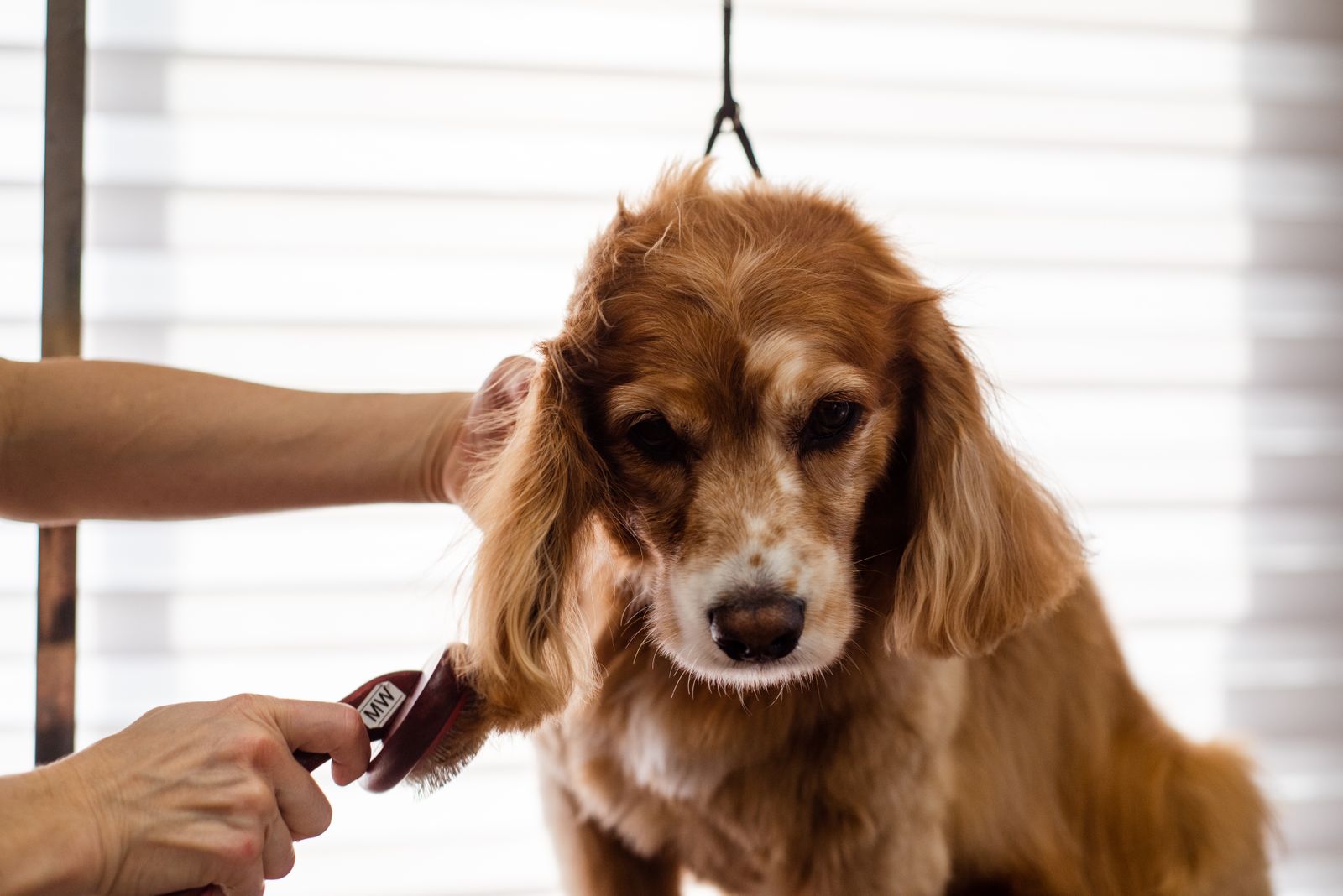
Your first visit, in the order it happens
- Check-in and coat assessment. The groomer runs hands through the coat, checks skin, ears, and nails, and talks through the cut you want. Matting found here changes the plan, so expect honest news.
- The bath. A full wash with coat worked down to the skin, ears protected, and a rinse that takes longer than the wash.
- The blow dry and brush-out. Forced air dries the coat and blows out loose undercoat; brushing straightens curly coats so the cut comes out even.
- The haircut or tidy. Clippers and scissors shape the body, face, feet, and sanitary areas. On double coats this step is a tidy of feet and feathering instead of a cut.
- Nails and ears. Nails trimmed or ground back, ears checked and cleaned on the surface. This is also when a groomer may flag an ear that smells off and needs a vet's look.
- The finish and the verdict. A final brush, a look over, and the conversation that matters most for a first-timer: when should this coat come back? Write that interval down.
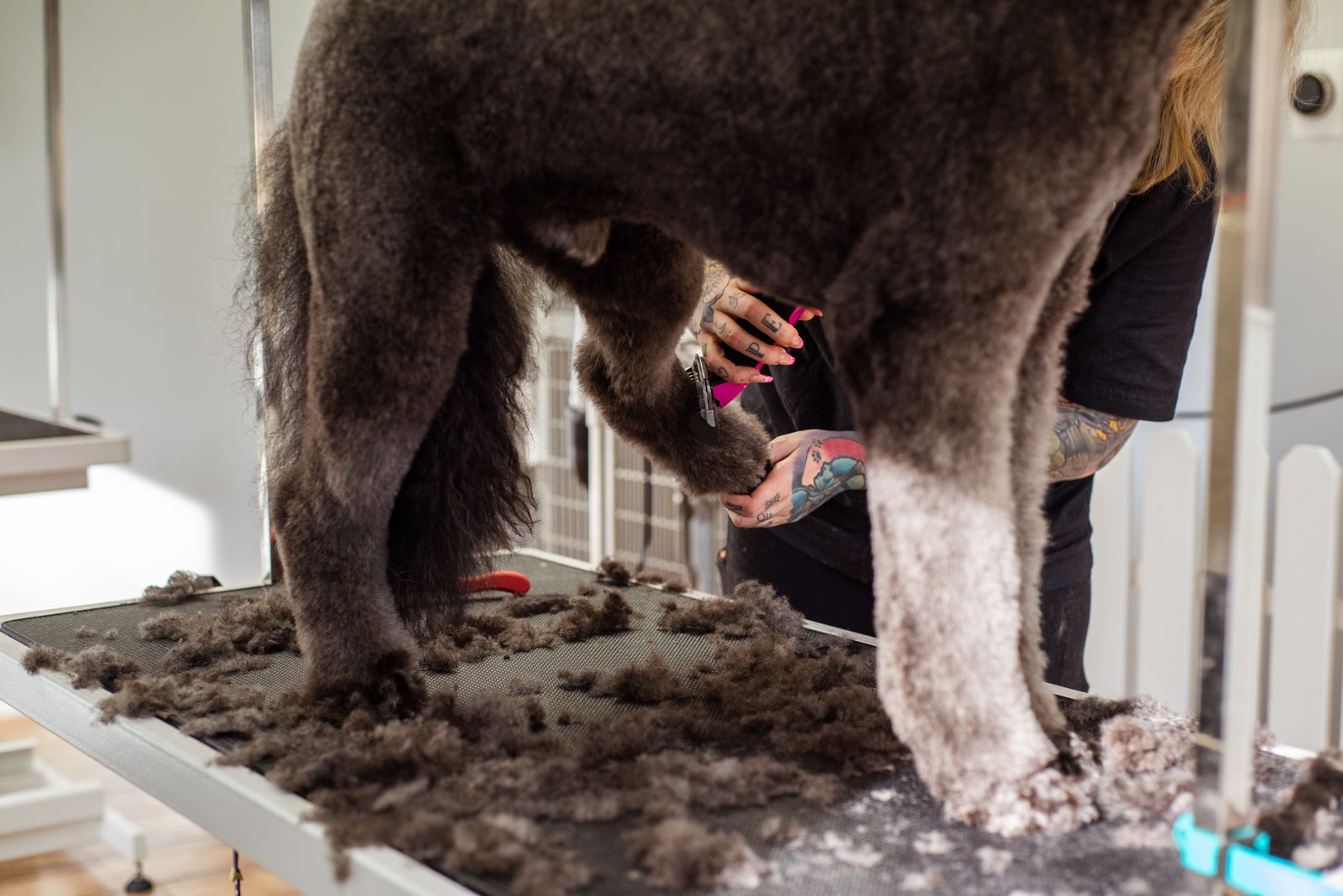
Setting the rhythm at home
Between visits, three small habits protect the interval. Brush to the skin a couple of times a week for any coat longer than short. Handle the feet and check nails every two weeks; nails usually need attention every three to four weeks even when the coat does not. And book the next appointment before you leave the salon, because Fort Mill schedules fill, and a two week slip on a curly coat is the difference between a trim and a shave-down.
Two situations deserve a call sooner rather than later. A coat that smells sour a few days after every bath may be carrying a skin or ear issue a groomer can spot but not treat, and that belongs with a veterinarian. And a dog whose coat changed suddenly, shedding in patches or growing slowly, is telling you something medical, not cosmetic. Groomers see skin more closely than anyone in a dog's life, so take the flag seriously when one is raised.
Puppy grooms at Lucky Puppy Pet Spa exist precisely for first-timers of the four legged kind: short, gentle introductions that teach a young dog the sounds and handling before a full groom is needed. Start early, follow the coat's clock rather than your memory, and the question answers itself after the first two visits. The coat tells you the schedule; your job is just to write it down, keep the appointments you make, and adjust by a week in either direction as the seasons and the coat itself give you new information.
Common questions
What should I bring to a first grooming appointment?
Current vaccination records, especially rabies, any notes on skin issues or sensitivities, and a photo of a cut you like on a similar coat. Mention medications, allergies, and any handling quirks honestly; groomers plan around them.
How long does a full groom take?
Commonly two to four hours depending on size, coat condition, and the services included. Dogs are worked in rotation with rest breaks, which keeps the experience calmer than a single rushed session would.
My dog's coat grew faster than the interval suggested. Is that normal?
Yes. Intervals are averages; age, season, health, and individual growth rates all shift them. If the coat is tangling before the appointment, shorten the interval or the cut, and tell the groomer what you observed.
Photos in this guide are representative stock images.
← All guides from Lucky Puppy Pet Spa← Back to Lucky Puppy Pet Spa