Inside every dog nail is a living core called the quick, carrying blood and nerves, wrapped in the hard shell you trim. Everything about nail care follows from that anatomy. Trim the shell regularly and the nail stays short; neglect it and the quick grows longer too, which is how a dog ends up with long nails that cannot safely be cut short in one visit.
For Fort Mill dogs walking on a mix of sidewalks, hardwood, and red clay yards, nails rarely wear themselves down enough. A comparison of the two trimming methods, plus the schedule that keeps the quick in retreat, covers most of what an owner needs to decide.
The quick, black nails, and the pink line
On a white nail you can see the quick as a pink shadow inside the shell, and the rule is simple: cut the shell, stop before the pink. On a black nail there is no window. Trim in thin slices and watch the cut surface; it changes from hard and flaky to a softer, darker center as you approach the quick, and that change is your stop signal. Cut past it and the nail bleeds and stings, which is painful for the dog and memorable, in the worst way, for future trims.
The angle matters too. Nails should be trimmed so the foot lands flat, not tipped back onto long front points. Dewclaws, the small nails higher on the leg, never touch the ground and never wear down, so they need trimming on the same schedule or they curl toward the pad.
| Method | How it works | Strengths | Watch-outs | Best for |
|---|---|---|---|---|
| Clipping | Scissor or guillotine clippers slice the tip off in one cut | Fast, quiet, no batteries or cords, easy on confident dogs | Can crush thick nails if blades are dull; one bad cut ends the session | Dogs that tolerate handling and owners with a steady hand |
| Grinding | A rotating stone files the nail down gradually | Smooth finish, tiny increments, easier to stop before the quick, ideal for black nails | Noise and vibration worry some dogs; slower on long nails; dust from the nail | Black nails, thick nails, long nails being worked back, nervous owners |
| Combination | Clip the bulk, then grind to smooth and shape | Speed plus a clean rounded finish that snags less on floors and fabric | Requires the dog to accept both tools | Most salon visits, including at Lucky Puppy Pet Spa |
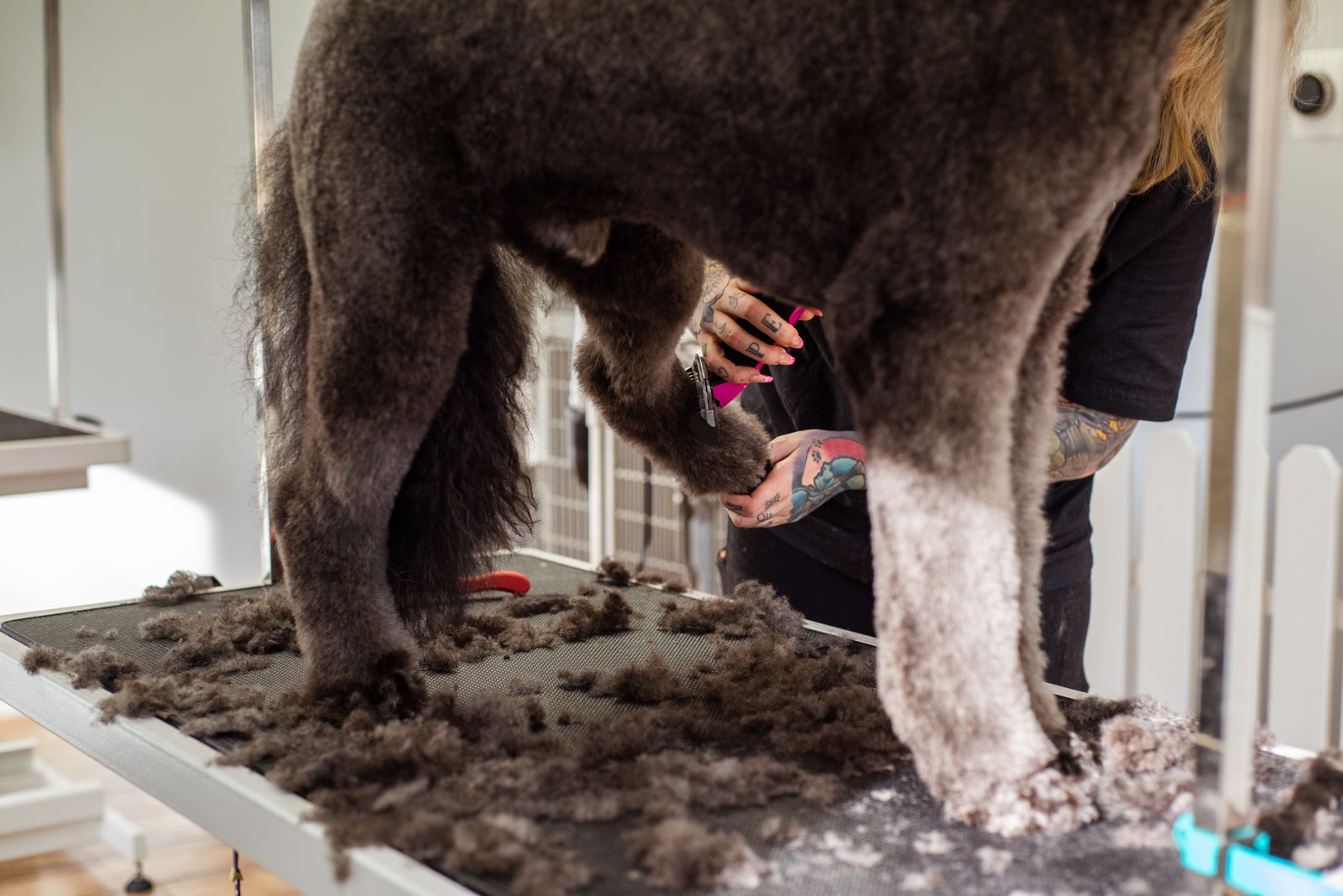
The schedule that keeps nails short
Every three to four weeks is the standard interval for most dogs, and it is not arbitrary. Trimming just the tip on that rhythm persuades the quick to recede gradually, so nails stay short and feet stay sound. Let two months pass and the same trim barely shortens the nail, because the quick has grown into the space. Long nails also change mechanics: the toes splay, the foot lands wrong, and over a long life that strain shows up in the joints.
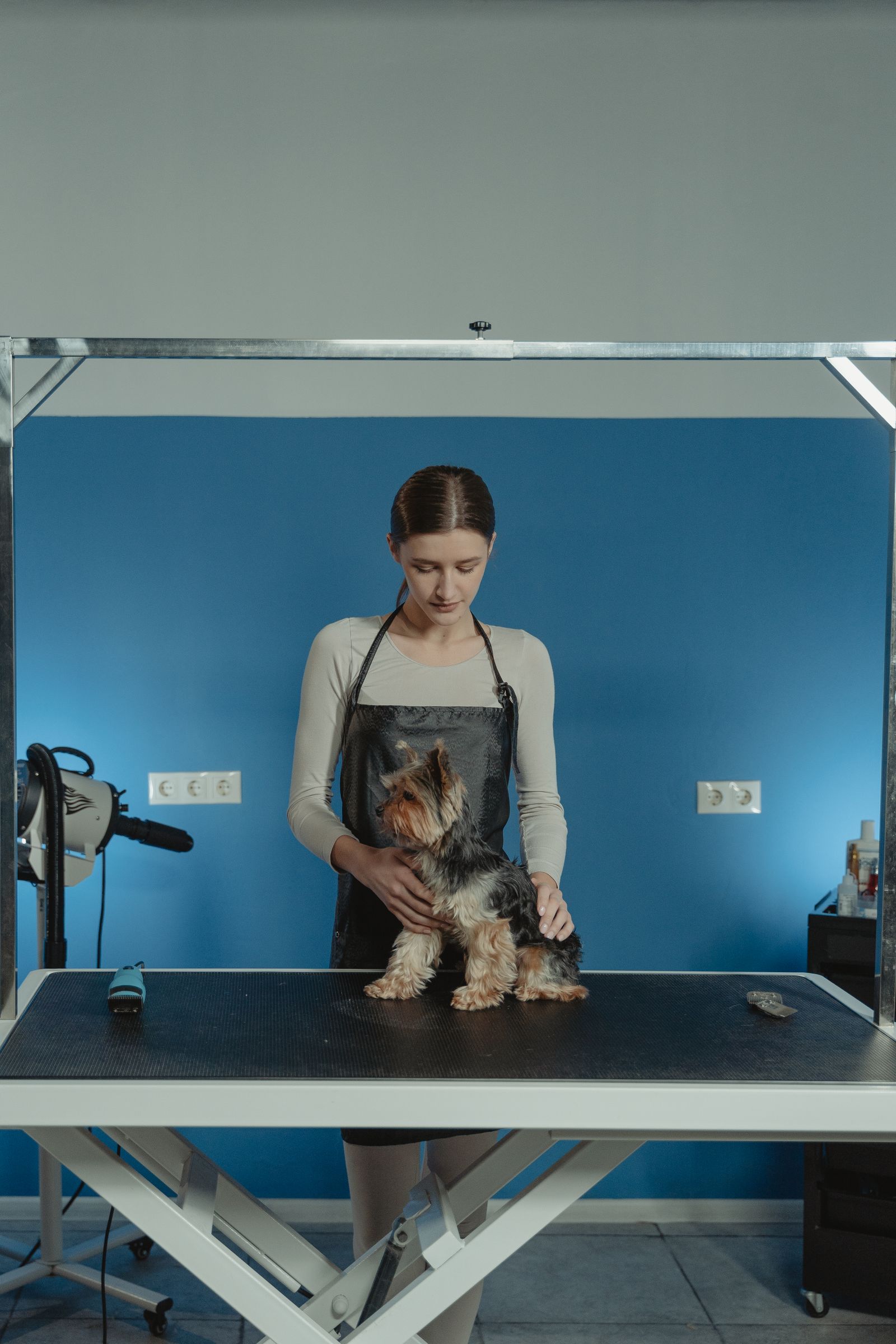
Getting a dog comfortable with trims is training, not talent. Touch the paws daily, tap the nails with the tool without cutting, and reward calm. Split a reluctant dog's trims across two days rather than wrestling through all four feet at once. Most dogs that hate nail trims hate the restraint and the surprise, both of which shrink with repetition and a predictable routine.
Listen for the household signal: clicking on hard floors means the nails are already past ideal. At Lucky Puppy Pet Spa, nails, ears, and finishing touches are part of the regular service list, and a standalone nail visit between grooms is a normal request. Short, frequent, unhurried trims are the entire secret. There is no technique that substitutes for the calendar.
Common questions
How can I tell where the quick is on black nails?
Trim paper-thin slices and watch the face of each cut. Stop when the center turns soft, dark, and round rather than pale and crumbly. Grinding gives even finer control, which is why many groomers prefer it for dark nails.
What if I cut the quick at home?
Stay calm, press styptic powder or cornstarch firmly into the tip, and keep the dog quiet for a while. Bleeding usually stops within minutes. Then end the session kindly so the dog does not link nail day with panic.
Do senior dogs need trims more often?
Often yes. Older dogs walk less, wear nails down less, and their nails get thicker and more brittle. Many seniors do best on a three week rhythm with grinding, which avoids the squeeze of clippers on a hard nail.
Photos in this guide are representative stock images.
← All guides from Lucky Puppy Pet Spa← Back to Lucky Puppy Pet Spa